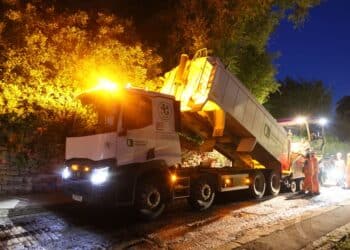

A project to widen the A92 Autobahn on the North side of Munich in Germany will help reduce traffic congestion. The project to widen the A92 along a 12km stretch has been approved by the government of Upper Bavaria. This follows a request from the Autobahn GmbH des Bundes, the state-owned firm that manages Germany’s Autobahn network.
An extra lane in either direction will be added between the Munich-Feldmoching motorway junction and the Neufahrn motorway junction close to Freising. The project includes redesigning two major junctions at Oberschleissheim and Unterschleissheim, to improve traffic flow and capacity, as well as boosting safety for drivers. In addition, new noise reduction systems will be installed along the route to reduce disturbance to residents in the area.
Studies carried out previously show that the current stretch of Autobahn, with two lanes in either direction, already struggles to cope with the existing traffic volumes and delays are common. This stretch of the route copes with around 53,000-62,000 vehicles/day at present. But the traffic volumes are expected to increase to as much as 85,000 vehicles/day by 2030, with a significant percentage being heavy vehicles.
Improving this Autobahn stretch will reduce delays and improve vehicle flow for the area, which includes traffic heading to and from Munich Airport. But the project will now cost €485.5 million. And this has been the cause for some criticism given that it is 450% higher than was originally estimated. Green politicians have said that there has been insufficient transparency into the reasons for the substantial cost increases for the project, adding that investing in alternative travel options such as rail and other public transport types would have been both more cost-effective and more environmentally sustainable.